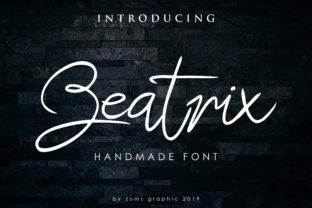
Beatrix Script: A Unique Handwritten Font for Distinctive Design
Beatrix Script is a natural handwritten font that brings a sense of authenticity and individuality to digital and print design projects. Designed to mimic the fluid, organic strokes of real handwriting, this typeface stands out with its exciting and unique characters. Whether you're creating branding materials, invitations, or editorial content, Beatrix Script offers a fresh approach to typography that can help your design stand out from the crowd.
What Is Beatrix Script?
Beatrix Script is a script font inspired by the irregularities and nuances of human handwriting. Unlike more structured and formal typefaces, it features variations in stroke weight, slant, and spacing that reflect the natural flow of pen on paper. This gives it a personal, almost artistic quality that can add warmth and character to any project.
The font includes a range of stylistic elements such as ligatures, alternate characters, and decorative flourishes, allowing designers to customize their text for different contexts. These features make it particularly well-suited for creative applications where visual interest and uniqueness are key.
Why Consider Beatrix Script?
If you're looking to add a touch of personality to your design work, Beatrix Script could be an excellent choice. Its hand-drawn appearance makes it ideal for projects that require a more organic or artistic feel. Some common use cases include:
- Branding and logos: The font’s unique style can help create a memorable identity that feels more personal and less corporate.
- Invitations and event materials: From wedding invites to festival posters, Beatrix Script can give these items a charming, handwritten aesthetic.
- Editorial and magazine layouts: It can be used for headlines, pull quotes, or captions to add visual interest without overwhelming the reader.
- Personalized gifts and merchandise: Custom t-shirts, mugs, or greeting cards can benefit from the font’s distinctive look.
For designers and creatives seeking to differentiate their work, Beatrix Script provides a versatile yet distinctive option that can elevate the visual appeal of various projects.
Benefits and Tradeoffs
One of the primary benefits of using Beatrix Script is its ability to convey a sense of authenticity and creativity. It can help communicate a more personal or artisanal message, which may resonate well with audiences looking for something unique or handcrafted.
However, there are also tradeoffs to consider. Because it is a script font, it may not be as readable as sans-serif or serif fonts in large blocks of text. This makes it less suitable for body copy or long-form content where clarity and legibility are essential.
Additionally, the font’s irregular nature means that it may require more careful typesetting and spacing to ensure consistency across different platforms and devices. Designers should also consider how it will appear at various sizes and in different color schemes, as some script fonts can lose their clarity when scaled down or printed in low-resolution formats.
Situations Where Beatrix Script Is a Strong Fit
Beatrix Script shines in situations where visual impact and a sense of individuality are important. Here are a few scenarios where it may be a strong fit:
- Creative branding: If your brand wants to convey a more artistic or bespoke image, this font can help reinforce that message.
- Design portfolios: Using Beatrix Script in your portfolio can showcase your attention to detail and willingness to experiment with typography.
- Marketing materials: For campaigns targeting niche markets or creative communities, the font can help establish a stronger emotional connection with the audience.
- Handwritten-style illustrations: When paired with other hand-drawn graphics or textures, Beatrix Script can enhance the overall cohesion of a design.
In these cases, the font’s unique characteristics align well with the goals of the project, making it a compelling choice for designers who want to make a statement with their typography.
When to Consider Alternatives
While Beatrix Script is a great option for certain applications, there are times when alternative fonts may be more appropriate. For instance, if your project requires high readability or accessibility, a more standard sans-serif or serif font might be better suited to the task.
Additionally, if you're working on a multilingual project or need to support a wide range of languages, you should verify whether Beatrix Script includes the necessary characters and glyphs for your target audience. Some script fonts are limited in terms of language support, which can be a consideration for international projects.
Another factor to consider is the context in which the font will be used. In professional environments such as business reports or technical documentation, a more formal and clean font may be preferred over a stylized script typeface like Beatrix Script.
Practical Decision-Making Insights
When deciding whether to use Beatrix Script, it's important to evaluate your specific needs and goals. Ask yourself the following questions:
- What is the purpose of the design? If it's meant to be eye-catching or convey a creative vibe, Beatrix Script could be a good match.
- Who is the target audience? If they prefer a more traditional or formal look, a different font may be more appropriate.
- How much text will be using the font? If it's primarily for short phrases or headings, the font's readability limitations are less of an issue.
- What platforms will the design appear on? Ensure that the font renders well across different devices and screen resolutions.
By carefully considering these factors, you can determine whether Beatrix Script aligns with your design objectives and helps achieve the desired outcome.
Ultimately, Beatrix Script is a valuable tool for designers looking to add a unique and expressive element to their work. While it may not be suitable for every project, it can be a powerful asset in the right context. By understanding its strengths, limitations, and best use cases, you can make an informed decision about whether it fits your design needs.